
Plastic Loyalty Cards Are Already Obsolete. AddyPass Is Building What Comes Next.
Founder Stories by Built in Baltics. A conversation with Roger Pärs and Aleksander Piirimees, founders of AddyPass

In this article
Every wallet has a drawer somewhere behind it, the one full of plastic loyalty cards, paper stamp cards, and the receipts you meant to scan. Roger looked at that drawer and saw a category waiting to be quietly replaced.
How It Started
AddyPass started with a simple frustration: loyalty programs still feel like 2005. Plastic cards, paper stamps, manual tracking, and complicated apps customers don't want to download. For the business, that means poor visibility into who their actual loyal customers are. For the customer, it means another card forgotten in a drawer.
The moment that pushed Roger to build was realizing the solution was already in everyone's pocket. "A loyalty card should not be something a customer needs to remember," he says. "It should already be in their phone." Apple Wallet and Google Wallet were the obvious answer to a problem nobody had wired up cleanly yet.
The gap was specific. Small and medium-sized businesses wanted modern loyalty. But most of the tools were either too technical, too expensive, or built for chains. AddyPass was created so a café, a salon, a gym, or a local brand could launch digital loyalty without developers, without printing cards, and without building an app.
Building From the Baltics
Estonia, in Roger's read, is small, direct, and very digital and that combination cuts both ways.
The advantage is speed. "If something is too complicated, they will tell you. If something creates value, you see it almost immediately," he says. Talking directly to business owners means fast, honest feedback, which has kept AddyPass practical rather than feature-bloated. Things that sound good on paper but don't matter at the counter get cut quickly.
The constraint is fragmentation. Local businesses run on a wide mix of POS systems, workflows, and digital maturity. In a larger, more homogeneous market, a startup might pick one vertical and one integration path and ride it. In the Baltics, you have to be flexible from day one, which pushed AddyPass to become a lightweight layer that works before deep integrations are in place.
There's a quieter Baltic dynamic founders elsewhere might miss: trust and local credibility carry weight here. A cold SaaS pitch isn't enough. Businesses want to see that you understand their reality, that support is close, and that the product won't add work for their staff.
How It Works
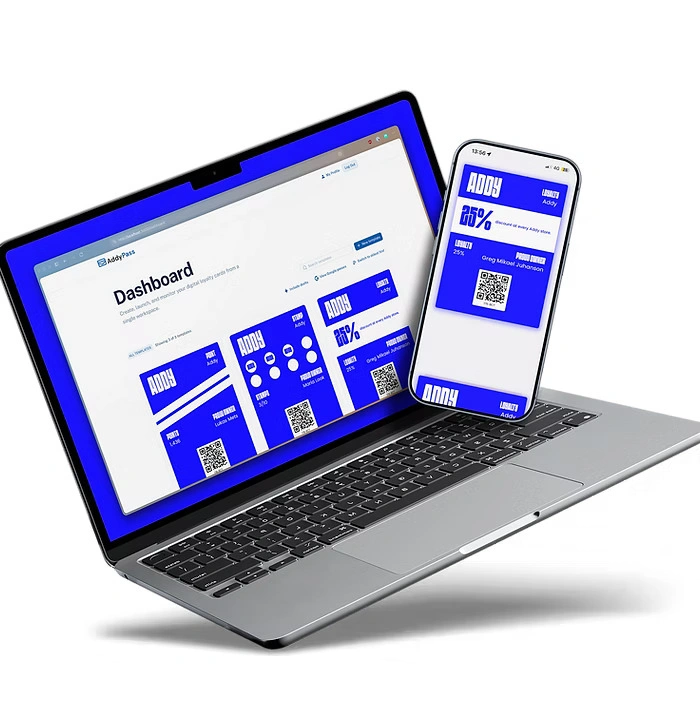
Today, AddyPass lets a business create and manage digital loyalty cards that customers add directly to Apple Wallet or Google Wallet.
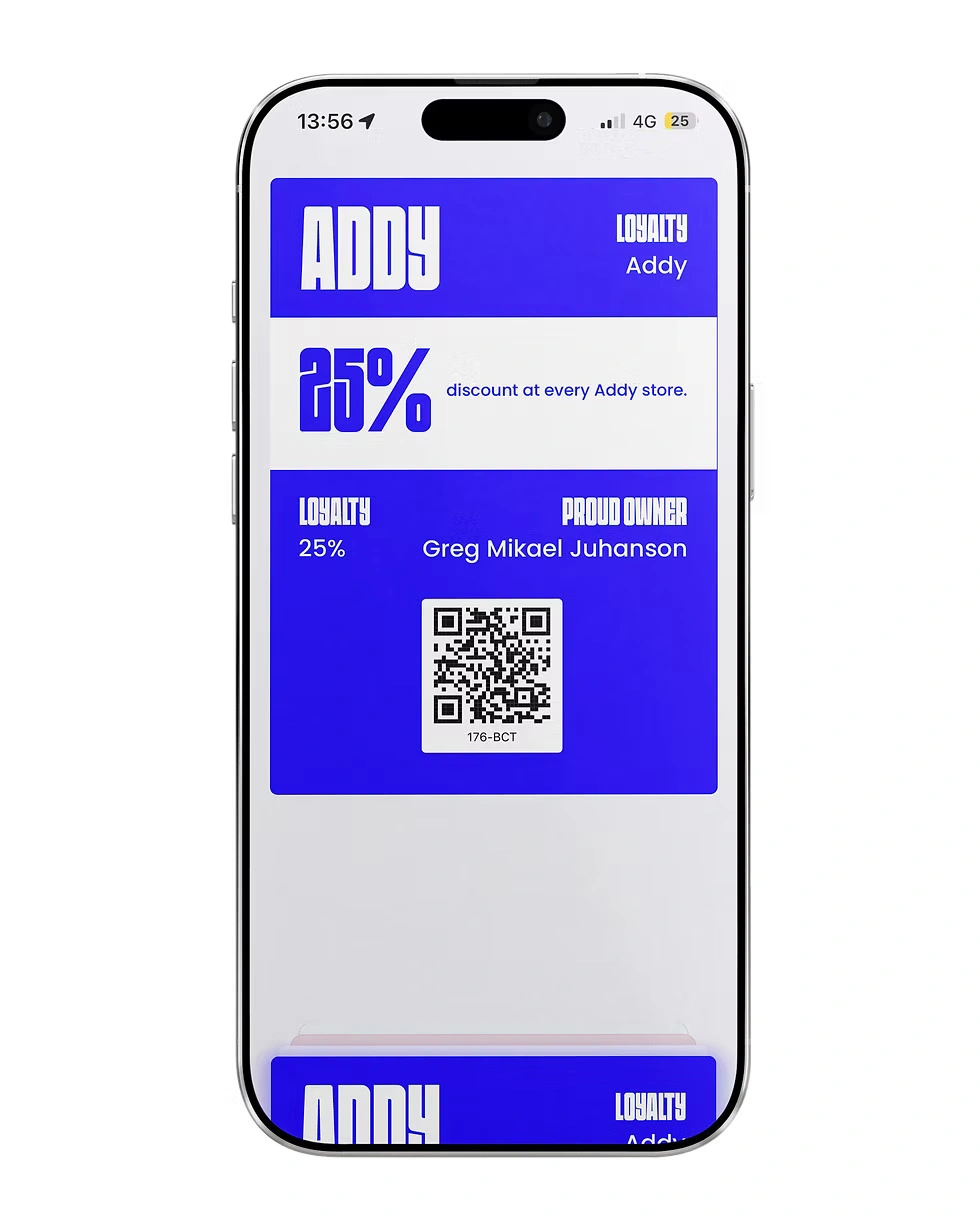
The business owner logs into the dashboard, designs a card, picks the loyalty mechanic — stamp card, discount, membership, voucher, recurring offer — and shares it via QR code or link. For the customer, it's three taps: scan, add to wallet, use from the phone. No app download. No plastic card. No account creation unless the business specifically wants to collect contact details.
The typical AddyPass customer is the kind of business that lives on repeat visits: cafés, salons, gyms, restaurants, local shops, service businesses. They already understand that bringing customers back matters. What they don't have is a way to measure and influence that loyalty.
What disappears is the gap between "we have loyal customers" and "we can actually do something about it." AddyPass gives the business a channel that sits directly in the customer's phone, with cards that can be updated, offers that can be pushed, and data that finally shows what's working.
The traction signals have been concrete. Pazzo, a venue in Tartu, has collected over 1,000 customer contacts through their AddyPass setup and has been turning loyalty into a marketing asset, not just a nicer version of a plastic card. One salon saw more than 100 users on the first day, which told the team something equally important: the customer side of the experience was finally simple enough.
The Hard Part
The hardest realization that came early was that AddyPass couldn't just be "a cool digital card builder." It had to work inside the messy reality of running an actual business.
Loyalty cards sound simple on the surface. They aren't. Every detail compounds: how a customer adds the card, how staff validates it, how rewards get redeemed, how offers update, how data shows up in the dashboard, how the whole thing folds into the daily workflow without slowing anyone down.
For a stretch, Roger questioned whether small businesses would adopt this at scale. Not because they disliked the idea (they liked it alot) but because they're already busy, understaffed, and cautious about new tools. "If AddyPass required too much explanation, onboarding, or manual work, it would not survive."
What turned it around was watching real customers add cards to their phones at real businesses. The question shifted from can we build this to how do we make this as effortless as possible. That reframe changed the product. "Simplicity became the main feature."
What's Next
In three years, Roger wants AddyPass to be the default loyalty infrastructure for small and medium-sized businesses in the Baltics. Not "scaling globally" but something more specific. The easiest way for a local business to launch, manage, and measure loyalty without an app, an agency, or a custom build.
The product will move deeper into automation and integrations. The dashboard gets smarter by surfacing what kind of offers work, which customers are active, when to trigger a campaign. POS integrations become central, so loyalty can connect directly to real purchases and redemptions, not just sit beside them.
The bigger bet is that digital loyalty becomes normal. Plastic cards disappear. Static, one-size-fits-all programs go obsolete. Businesses get a simple, measurable way to bring people back. AddyPass wants to be the platform that makes that transition routine rather than novel.
Written by
Mihkel Hõbemägi · Co-founder, Built in Baltics