
Finding a Pet You Can Trust Is Harder Than It Should Be. Taily Is Rebuilding the Whole Journey.
Founder Stories by Built in Baltics. A conversation with Artur Viitmann, co-founder & CEO of Taily (with Marc Gusev and Pavel Fleiser).

In this article
Buying a pet should be a happy moment. Too often it begins with a quieter question: can I actually trust this seller? That question heard again and again from friends and relatives is where Taily started. What turned it from a narrow fix into something far bigger came later, when Artur got a dog of his own.
How It Started
The idea is roughly ten years old. It began in a frustration Artur kept hearing from the people around him. Finding a pet meant wading through a disconnected market where trust was the scarcest thing, and where some sellers weren’t transparent about an animal’s origin or health. Who’s a responsible breeder? What’s this animal’s real history? The usual places to look didn’t answer either question.
Then Artur got a dog, and the problem widened. Grooming, vets, trainers. Every service had to be found and managed separately. Even veterinary records were disconnected between clinics, turning something as simple as switching vets into unnecessary friction. That's the moment Taily changed shape in his head: from a better way to find a pet into one platform that could support the entire ownership journey.
A Team Effort
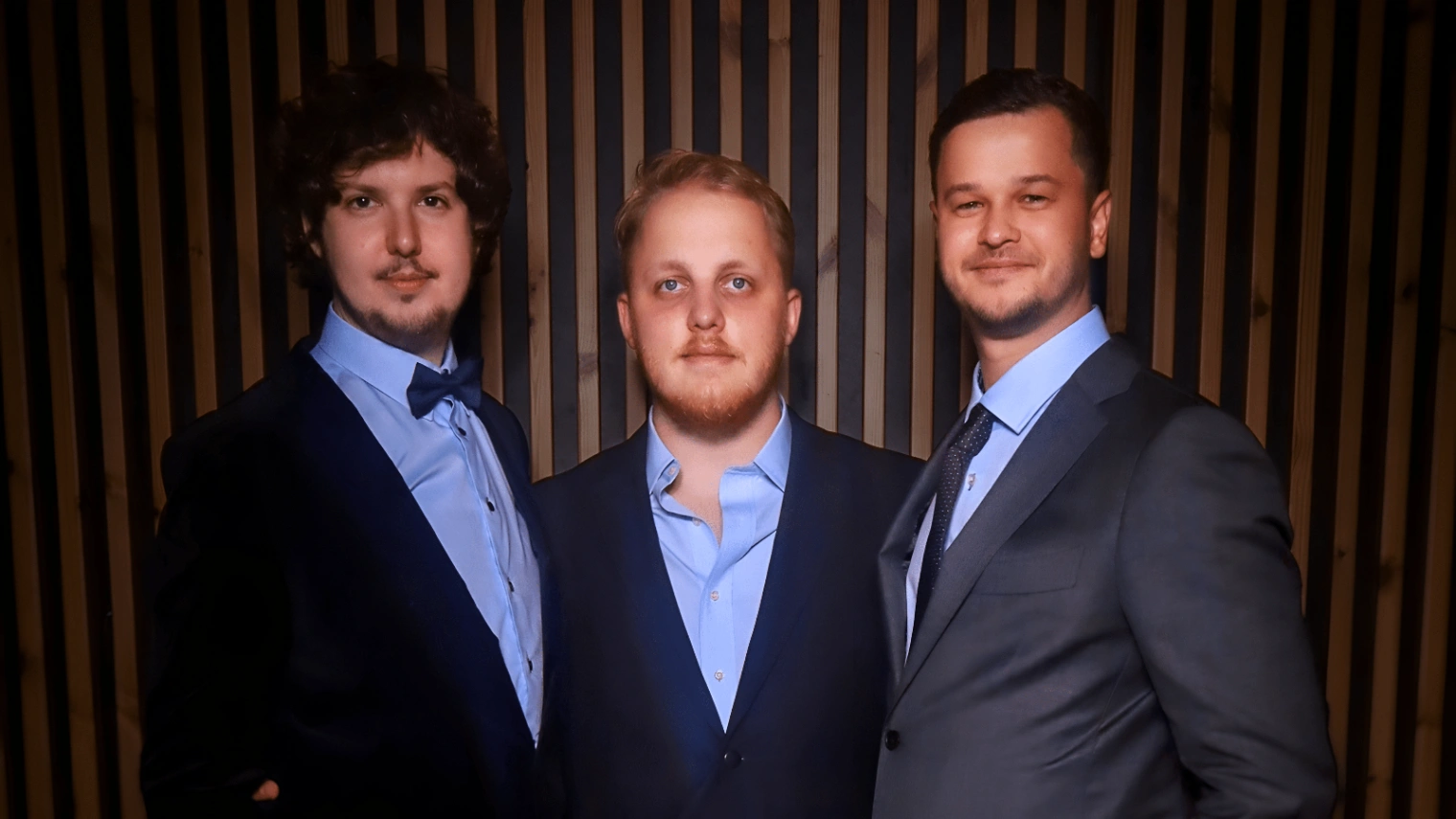
Taily isn’t a solo project, and Artur is quick to say so. “Taily is very much a team effort,” he says. “Pavel is responsible for the technical side and leads product development, turning the idea into an actual working platform. Marc leads marketing and is focused on making Taily visible, building awareness, and helping us reach the right people. My role is more on the business, product, partnerships and overall direction side, so we complement each other quite well.”
Building From the Baltics
Building in Estonia has pushed Taily toward a disciplined strategy: win locally before expanding. The Baltic markets are small, which Artur frames as a feature as you can't hide behind vanity metrics. If people don't trust the platform, or quality supply is thin, you find out fast.
Estonia is also an unusually good testbed for a product like this. People here are already comfortable with digital services and expect information to be accessible and transparent. That is the expectation Taily is built around. The plan follows from both facts: prove the model in Estonia, extend it across Latvia and Lithuania, and only then take a proven playbook into larger EU markets. The small market isn't the ceiling, but the quality filter.
How It Works
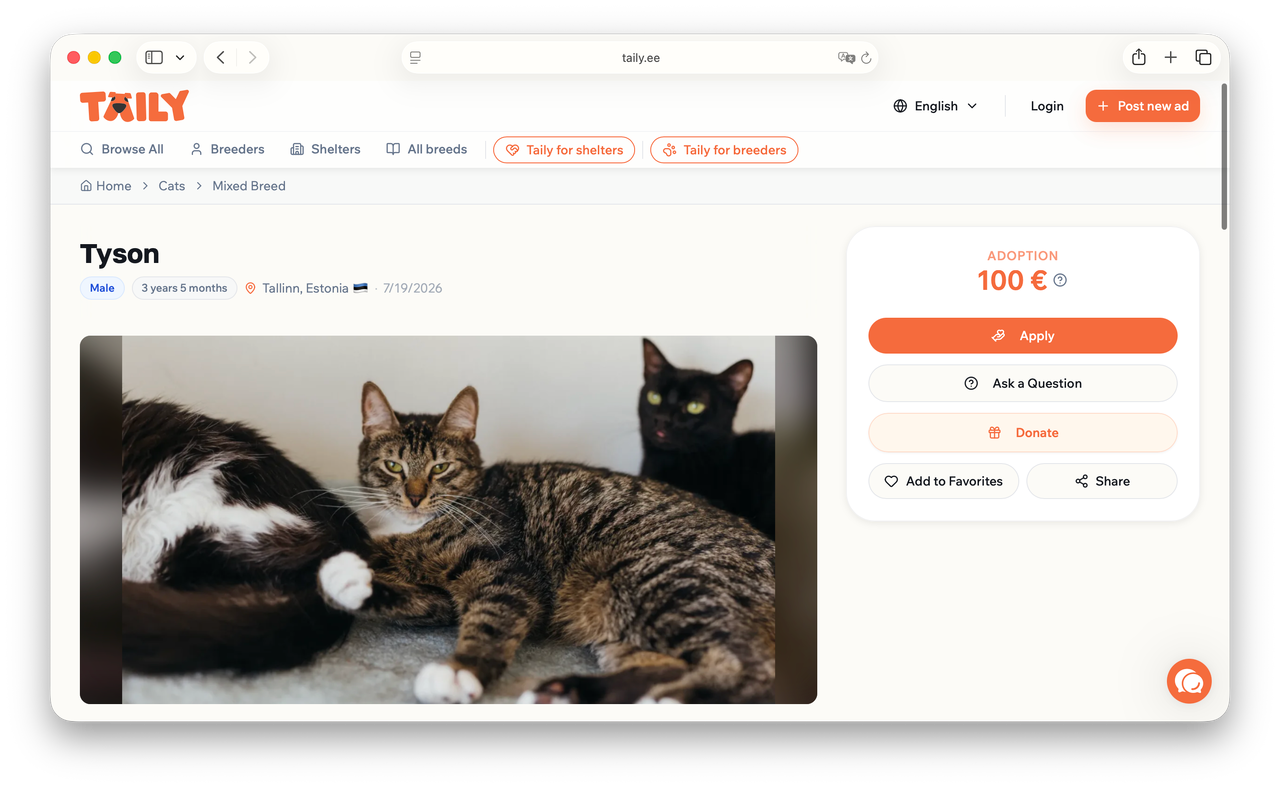
Taily is being built as a trusted marketplace where people find pets from breeders and shelters in one place, with far more transparency than a traditional classified site. Pet profiles carry the information that actually matters, like vaccination, microchip, and sterilization status, while breeders and shelters pass platform checks designed around animal welfare and trust.
The team is firm about what Taily is not: just another place to post pet ads. The point isn’t to add one more classifieds feed to the pile, but to build a trustworthy, connected environment that stays with an owner for the whole of a pet’s life. Not a transaction that ends the moment money changes hands.
For someone looking for a pet, the problem that disappears is uncertainty: the jumping between sources, the quiet worry about whether the seller or the information can be trusted. And the relationship is designed to outlast the adoption. Over time, Taily aims to keep supporting the owner with grooming, veterinary services, trainers, products, and eventually connected health information. All in one ecosystem.
Under the hood
Modern, pragmatic web stack with React and TypeScript on the frontend, Supabase and AWS behind it. The team deliberately avoids over-engineering this early; what matters more is iterating quickly, testing assumptions with real users, and keeping the architecture flexible as the product evolves.
The most encouraging early signal has been how many people independently recognize the same problem. Conversations with breeders, shelters, and active pet-seekers keep surfacing the same frustrations and it carries extra weight because each side of the ecosystem feels the problem differently. Artur is careful not to overstate traction this early, but hearing the pain described, unprompted, from every direction is its own kind of validation.
The Hard Part
There's no dramatic near-death moment in Taily's story, Artur is honest about that. The genuine difficulty is quieter and more relentless: building the company alongside full-time jobs, in the hours normally reserved for evenings, weekends, and personal life.
That grind forces a repeated decision. Do you believe in the idea enough to keep going when progress feels slower than you'd like? What keeps the team moving is a shared conviction that the problem is real, and that if they can get all the pieces in place, people will see the value in a more trustworthy, connected way to manage pet ownership.
The assumptions that will really test the model are still ahead, and Artur names them plainly rather than pretending they're settled. One: how breeders respond to stricter ethical checks and compliance? Some may find them excessive, but for Taily they're the whole point of a platform people can trust. Two: veterinary integration, since pet healthcare remains highly fragmented and almost nobody has tried to connect records and clinics into one ecosystem. These are things to test in the real world, he says, not convince yourself about on paper.
What's Next
In three years, Artur wants Taily established across the Baltics, with Estonia as the market where the model was first proven. The marketplace for finding and adopting pets stays the entry point but by then he expects a meaningful service layer around veterinary care, grooming, trainers, and more.
The deeper shift is the pet profile itself. Evolving from something you use only while finding an animal into a persistent digital profile that carries health and ownership information throughout the pet's life. Once the ecosystem is proven in the Baltics, the next chapter is gradual expansion into selected EU markets. Deliberately, not everywhere at once.
The Toolbox
The workflow Taily leans on most is AI-assisted, spec-driven development. The team prototypes fast in tools like Lovable and other low-code environments, then turns the ideas worth keeping into clearer specifications and builds the real codebase with Claude Code and Cursor. It's shifted how they work. More time spent discussing what the product should do and testing ideas, less treating every experiment as a full build.
On influences, Artur points not to a book but to a person: Michael Burich, founder of the Estonian clothing brand Maison Beast. The lesson that stuck goes beyond believing in your idea. It's the importance of surrounding yourself with people who genuinely believe in you and what you're building. Alone you can only do so much, but with a strong, supportive team, the ambition itself gets bigger. That idea, he says, has shaped how he builds Taily as much as any business book.
🐾 How you can help?
Taily most needs people willing to challenge the product and help test it properly. Breeders, shelters, veterinary clinics, and future pet owners. The team especially wants to meet responsible breeders and shelters who agree that stronger transparency and animal-welfare standards are good for the market, and veterinary clinics that see value in making pet health records less fragmented. And if you're thinking about getting a pet, they want to hear exactly what makes that process frustrating today. Reach out via Linkedin to Artur, Marc or Pavel or at taily.ee.
Written by
Mihkel Hõbemägi · Co-founder, Built in Baltics