
They Built an AI Tool to Run Their Own Stores. Now Scly Is Selling It to Everyone Else.
Founder Stories by Built in Baltics. A conversation with Kaarel Kask and Aleksander Susi, co-founders of Scly.

In this article
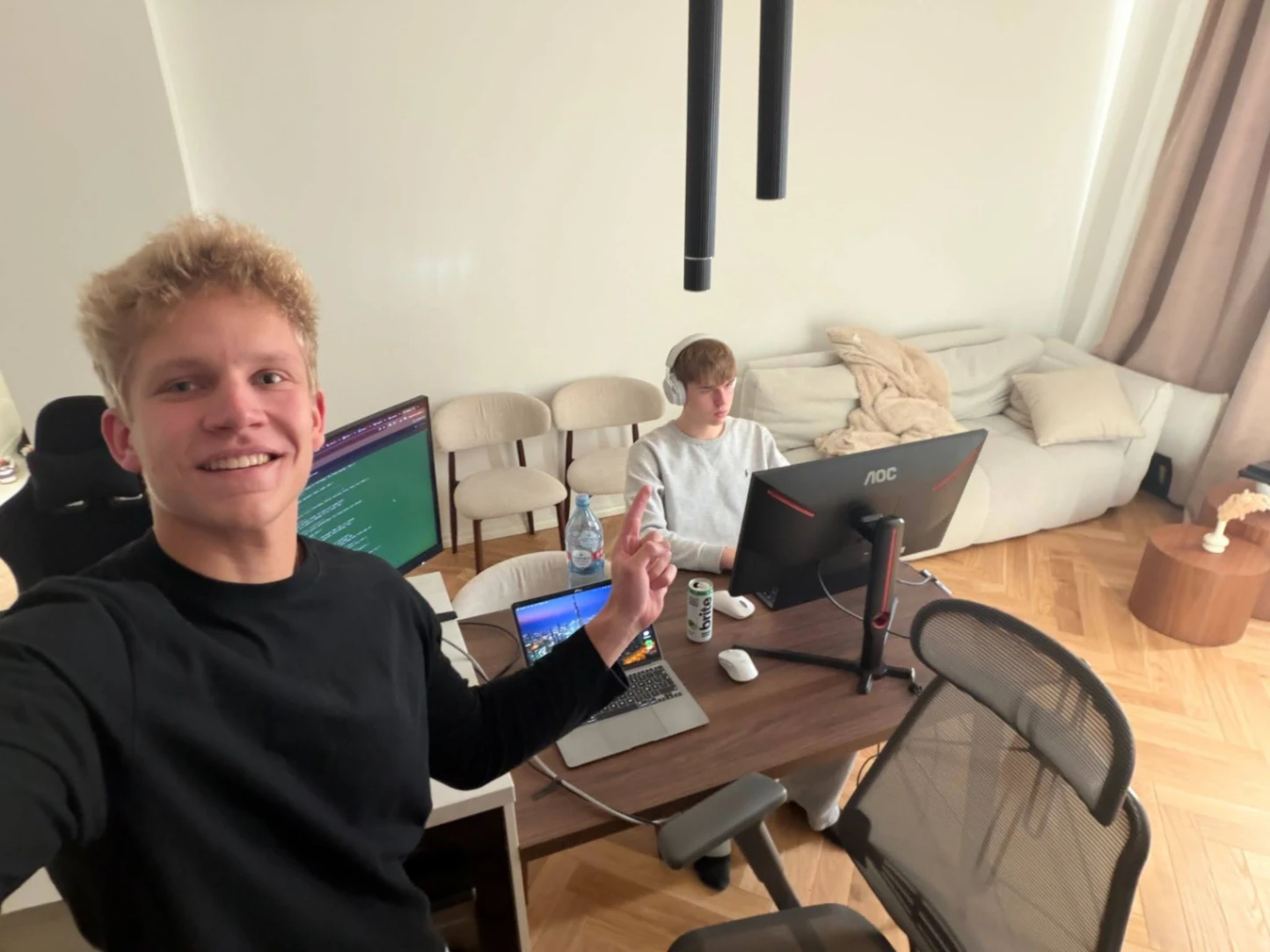
Kaarel Kask and Aleksander Susi have been selling online for most of their lives. This summer they moved in together with one goal: build an e-commerce business that makes serious money. To get there faster, they built themselves an AI tool that did the work of a whole marketing team. It worked so well that they turned it into a product.
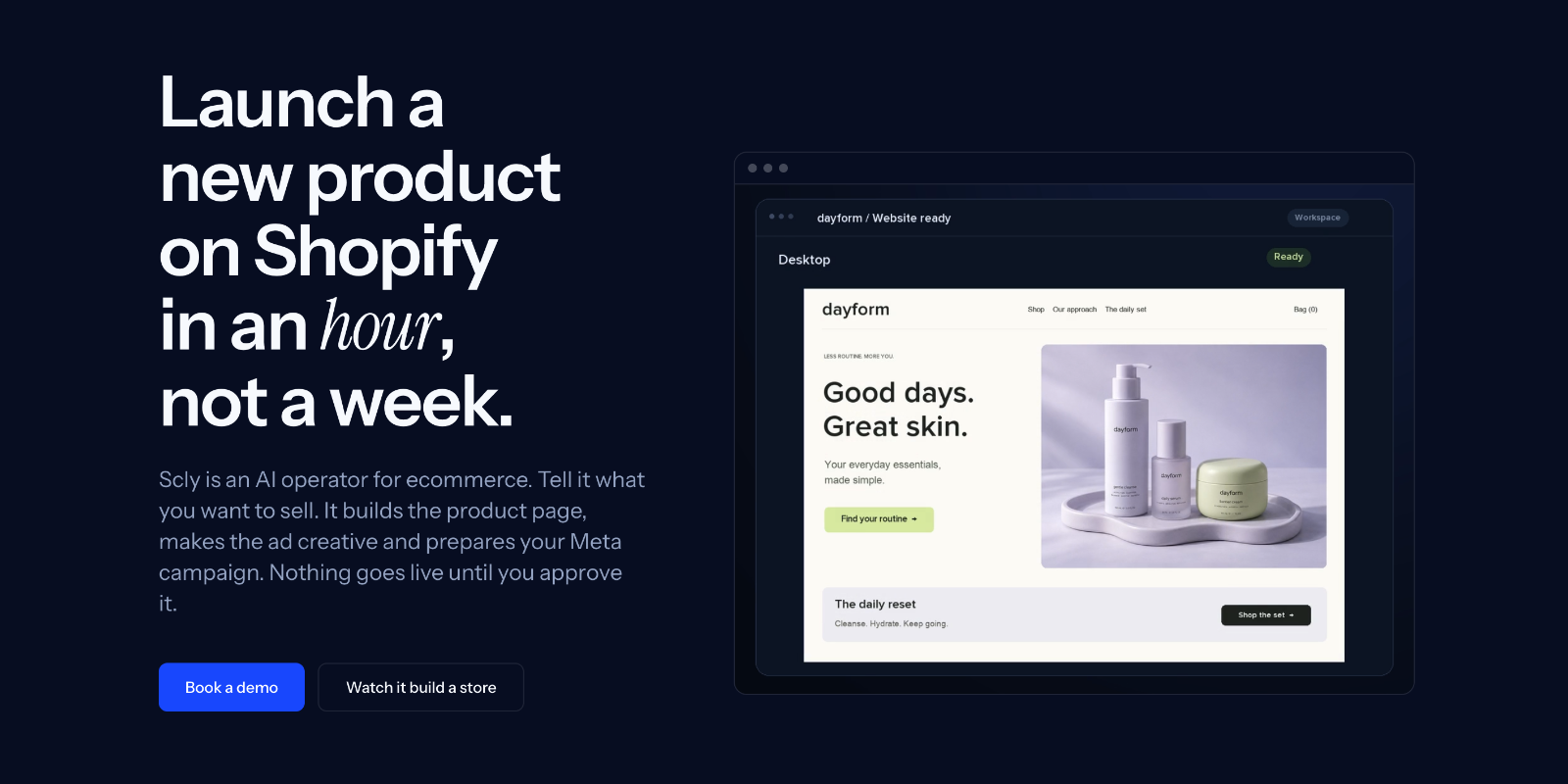
That product is Scly, "the AI operator for ecommerce."
How It Started
The internal tool came first. Kaarel and Aleksander were running their own stores and losing whole days to the work that never ends: making ads, building product pages, testing angles, starting again. So they automated their own workflow.
The idea to sell it came by accident. Kaarel was lying in bed, talking with his girlfriend, when it clicked.
"Why are we keeping this internal? Why can't we build a SaaS around it and ship it to the market?"
The logic was simple. AI had become powerful enough that 20-hour workdays spent on ads and websites felt like a choice, not a necessity.
"Why should we spend 20-hour-plus workdays developing ads and building websites when it's possible to build a tool that does it for you?"
They already had proof. Using only the tool, their own operation generated $400k in revenue in its first 30 days. If it worked that well for them, everyone else in the same scene would want it too.
The split between them is clean. Aleksander owns everything technical: development, bugs, errors, new features. Kaarel decides what to build next and how to make it better, and handles finding clients and go-to-market.
Building From the Baltics
Kaarel is candid: being Baltic hasn't shaped the product much, beyond the fact that Scly is the first team in the Baltics building this kind of tool. Where the region helps is people.
"There's a closed network of VCs and builders here, so it's easy to network."
The flip side is market size. Scly's ideal customers are e-commerce operators spending thousands a day on ads, and there aren't many of them at home. Most are in Dubai, the United States or Asia.
"For networking it's definitely a pro. For go-to-market and reaching clients, the market here is very small. That's a big constraint."
It's a familiar Baltic pattern: build at home, sell everywhere else from day one.
How It Works
Scly covers the whole loop, from picking a product to running the ads that sell it.
It starts with the product. You either bring one or ask Scly to find one. Then comes the content. You can generate everything inside the platform with AI, or paste in links to existing videos and content online and let Scly do the editing. The output covers the full Meta advertising toolkit: static ads, image ads, video ads, advertorials, and the store website itself.
Then it runs the ads. Scly connects directly to Meta, schedules campaigns and monitors how they perform. When an angle works, it spots it and makes more in the same direction. When one doesn't, it switches it off.
The typical customer spends $1,000+ a day on Meta, ideally $10,000+. Scly serves two kinds of them.
The first has a winning product but has run out of hours. They know more creatives and more tests would grow the business, but there's no time to make them. Scly takes that work off their plate.
The second is the newcomer drowning in tools. They want to get into e-commerce, pay for a pile of AI subscriptions, and still don't know what works. Scly replaces the pile with one platform.
"Long story short, our product solves time management. It knows what works and it knows how you work. It's an all-in-one problem solver for time and creativity, and you don't need subscriptions to a bunch of other platforms."
It's working. Scly has 7 paying clients, and more than $1 million a month in ad spend runs through the platform. What clients point to most is speed, and that Scly follows their own playbook exactly the way they want it.
Under the hood, nothing exotic. The code is vibe-coded and runs on Railway and GitHub, on fine-tuned open-source models. Higgsfield handles the video ads and creatives.
The Hard Part
Scly hasn't had a near-death moment, and the first customers came easily. Technically, Kaarel and Aleksander were the first paying users, running their own stores on the tool. Next came friends and contacts from the e-commerce scene, who jumped on as soon as they tried it.
The hard part was the plumbing. The founders assumed hooking into the Meta and Shopify APIs would be easy.
"The reality was completely different. A total brainf*ck."
The newest problem is a good one to have. Scly started onboarding demo users in mid-October, and paying clients followed. A hard launch was planned for early November, but it's on hold: the waitlist is too long for the team to handle. For now Scly isn't taking new clients while the founders work out how to scale.
What's Next
Today Scly runs on Shopify and Meta. In three years, the founders want those to be two integrations among many: Google Ads, TikTok Ads, TikTok Shop, WooCommerce, Wix and more.
"Meta ads is only one of many advertising platforms. Shopify is only about 23% of global e-commerce stores."
They also want to go deeper into each part of the workflow, so a seller who only cares about product research, video ads or websites gets as much out of Scly as someone using all of it.
The biggest bet is further out. Kaarel wants to bring payment processing into the platform, which would put Scly in direct competition with the store builders themselves.
"In three years, it's very probable you won't need Shopify anymore. We'll have the same options for a fraction of the price, and it's easier because everything is in one place. You only need a domain."
The Toolbox, and One Book
The tool Kaarel can't live without is ChatGPT.
The book is a less obvious pick for an e-commerce founder: Ray Dalio's Principles for Dealing with the Changing World Order, a study of how empires and economies rise and fall over centuries. For a team already planning how to outgrow Shopify, thinking in long cycles fits.
At a Glance
| Company | Scly |
|---|---|
| Tagline | Invent. Test. Grow. The AI operator for ecommerce. |
| Founders | Kaarel Kask, Aleksander Susi |
| Based in | Estonia |
| What it does | Finds products, creates ads and store pages with AI, then runs and optimises Meta campaigns automatically |
| Integrations today | Shopify, Meta |
| Ideal customer | E-commerce operators spending $1,000–10,000+ a day on Meta |
| Traction | 7 paying clients, $1M+ a month in ad spend through the platform |
| Launched | Mid-October 2026 (demos and first paying clients); hard launch on hold, waitlist open |
| Stack | Railway, GitHub, fine-tuned open-source models, Higgsfield |
| Looking for | A technical team member; high-volume sellers for the waitlist |
| Website | scly.dev |
How You Can Help
- A technical teammate. Demand is ahead of capacity, and the team wants another engineer alongside Aleksander.
- High-volume sellers for the waitlist. If you run Shopify dropshipping or a brand doing $10k+ days, get on the list at scly.dev.
Try Scly at scly.dev, connect with Kaarel and Aleksander on LinkedIn, or follow Scly on LinkedIn.
Written by
Mihkel Hõbemägi · Co-founder, Built in Baltics